

Optimizely Script Hijack: Who Else Runs Code on Your Checkout?
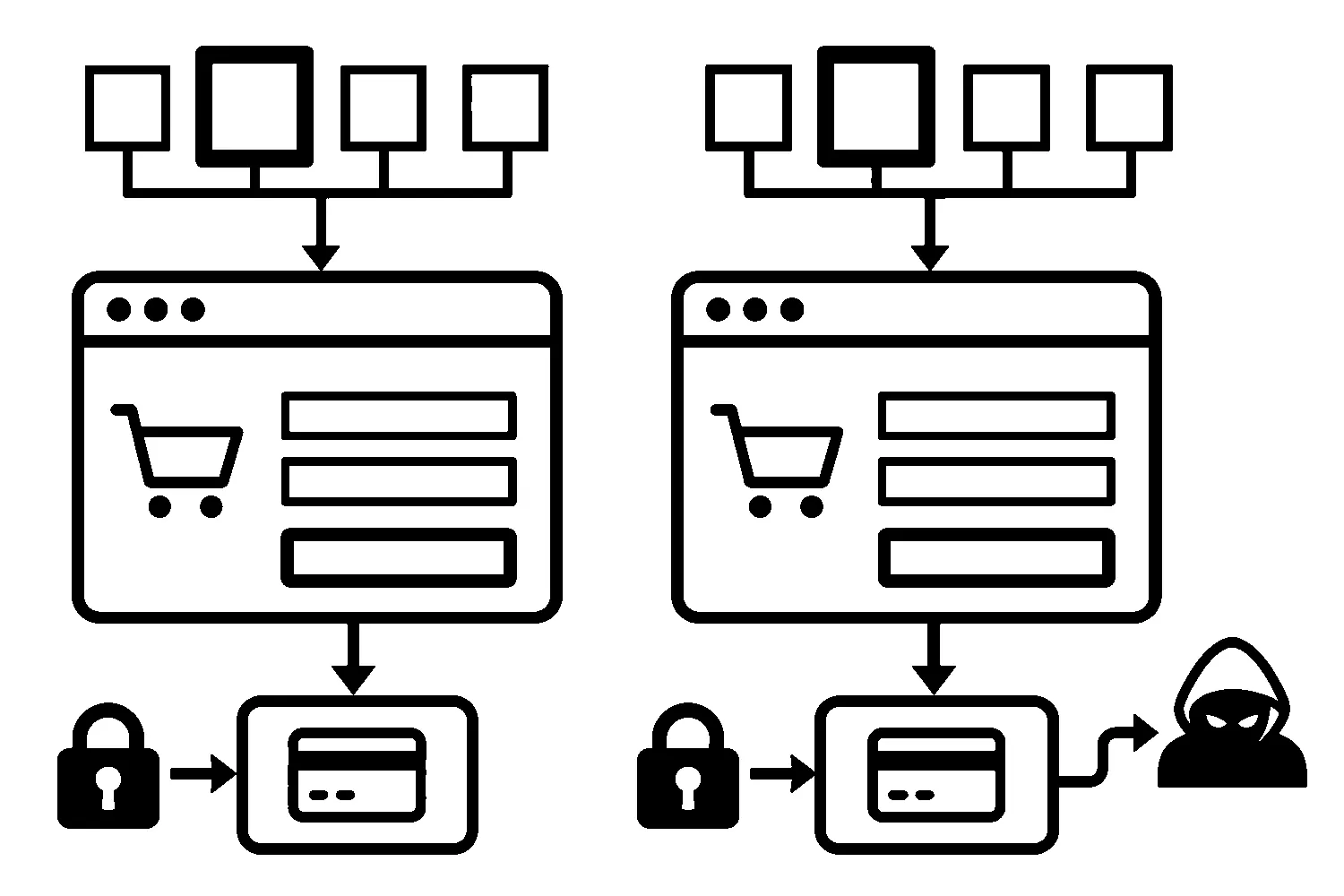
On November 16, attackers got malicious code into scripts that Optimizely serves to its customers’ websites. Visitors to at least 178 organizations, including CNN, the BBC and Zoom, loaded it.
Your site probably loads outside scripts too. Those scripts run with full access to your pages, forms and checkout.
This story is still developing. Below is what the sources supported as of November 17.
What happened
Optimizely sells A/B testing software. Customers add a small script, called a snippet, to their sites. The snippet loads from Optimizely’s servers.
According to security firm Report URI:
- The attacker wrote malicious code into a custom-code field in customer projects. The rest of each snippet was untouched.
- The file still came from Optimizely’s own domain with Optimizely’s certificate. Browsers treated it as trusted.
- The code swapped cryptocurrency wallet addresses for the attacker’s, and captured card numbers, expiry dates and security codes typed into a site’s own form fields.
- It could not read cards typed into a hosted payment frame from a provider like Stripe or Adyen.
- On iPhones and iPads it also tried to load exploit kits. No one has reported a real device taken over.
- Report URI checked 1,611 snippets and found code in 188 of them, across 178 organizations. It says the real number is likely higher.
- It counted about $7,040 of crypto received by the attacker’s wallets by the evening of November 16. StepSecurity puts the total near $6,600 and notes the blockchain does not show which transfers came from victims. The attacker moved the money out of those wallets early on November 17.
The first injection Report URI saw was at 04:21 UTC on November 16. A mass cleanup ran from about 20:40 UTC. By 23:11 UTC Report URI saw every infected file clean, and the files have stayed clean. The registry has put the attacker’s main domain on hold, so it no longer resolves.
Report URI says it cannot see how many cards or cookies reached the attacker.
What Optimizely has said
Optimizely’s incident notice, posted November 17 at 01:02 UTC, says an unauthorized party “exploited a vulnerability in Experimentation and used it to add malicious JavaScript to some customer projects.” The company says it fixed the vulnerability, removed the injected code, secured affected accounts and added protections.
Optimizely has also said the flaw was in the account signup flow, according to StepSecurity and The Register. The Register adds that Optimizely revoked tokens and notified affected customers. We have not seen those statements in the notice itself.
Still unanswered in the notice:
- How the flaw gave the attacker access to unrelated customers’ projects.
- How many projects were changed.
- When the fix went in.
- Whether the attacker still has access. Report URI saw one customer’s script cleaned and then re-infected on November 16, before the final cleanup.
- What customers should do.
Why this matters for a small business
You do not need to use Optimizely for this to apply.
Many small business sites load code from other companies:
- A/B testing and personalization tools
- Chat widgets
- Review badges
- Analytics and ad pixels
- Tag managers
Each one can run code on every page, including your checkout and contact forms. If that vendor is hacked, your site serves the attack. Your own site was never broken into. The certificate still looks valid.
Malwarebytes put it this way: a trusted website’s third-party script can become the route through which malicious code reaches a visitor’s browser.
What to check this week
1. List every outside script on your payment and form pages. Ask your web team for the list, or open your browser’s developer tools and look at the Network tab. Know who owns each one.
2. Remove what you do not use. An old testing tool or retired chat widget still runs. Delete it.
3. Keep outside scripts off checkout pages when you can. Take card details through your payment provider’s hosted fields. In this attack, those fields were out of the skimmer’s reach.
4. Ask for a Content Security Policy (CSP). A CSP is a rule your site sends to browsers: “only run scripts from this short list of sources, and only send data to these places.”
- List only the sources you actually need.
- Report URI found that allowing the vendor’s own domain did not help, because the bad code came from that domain.
- Restricting where the page can send data blocked the card and cookie theft on some sites. It did not stop the wallet swapping.
- Two settings,
'strict-dynamic'and'unsafe-eval', let the payload run on some sites.
In Report URI’s check of 256 affected hosts, 68 had no CSP at all and 24 blocked the payload.
5. Ask about Subresource Integrity (SRI). SRI pins a script to a fingerprint. If the file changes, the browser refuses to run it. It works for files that never change. It does not fit snippets a vendor updates whenever a setting changes, which is how the Optimizely snippet works. That is why a CSP and monitoring matter too.
6. Monitor for new scripts. Set up an alert when a new script or a new data destination shows up on your site. Report URI says this kind of monitoring would have flagged the attacker’s script even though it arrived from a trusted host.
7. If you use Optimizely, Report URI recommends checking the custom code in every project and experiment for 1688360, atob( or anything you did not write. Also review who can write to your account and rotate credentials. If your own forms take card details, treat cards entered on November 16 as possibly exposed.
What Robben Media did
We checked our clients’ sites after the news broke. Of the 44 client homepages we checked, none loaded Optimizely or the attacker’s domain.
That check covers homepages on one day. It does not replace ongoing monitoring.
We are adding ongoing monitoring of the outside scripts our clients’ sites load. It is not live yet. When it is, a new script appearing on a client site will be something we see, not something we hear about from the news.
For the host and plugin side of this risk, see Your Website Host Is Now Part of Your Security Risk and WordPress Plugin Risk Is Now a Business Continuity Problem.
Want to know what runs on your checkout page? Contact Robben Media and ask for an outside-scripts review.
Sources
Reported as of November 17, 2026. We will update this post as Optimizely shares more. Optimizely’s status page still listed the incident as “Monitoring” on November 17.
- Optimizely incident notice, “Web Experimentation Security Incident” (status page mirror), posted November 17, 2026, 01:02 UTC
- Report URI, “World’s Largest Brands Infected With Malware Via Optimizely”
- The Hacker News, “Hijacked Optimizely Scripts Served Card Skimmer and iOS Exploit Kits to CNN, BBC and Zoom Visitors”
- StepSecurity, “OPTIMJACK: Optimizely-Hosted Scripts Loaded a Crypto Clipper and Card Skimmer on 178 Organizations”
- SecurityWeek, “Optimizely Vulnerability Exploited to Serve Malware on Major Websites”
- Malwarebytes, “CNN, BBC, Zoom, and other sites served malicious code in supply-chain attack”
- The Register, “Optimizely hack turns world’s biggest websites into malware dispensers”
- Security Affairs, “OPTIMJACK: BBC, CNN and Zoom Among Targets of Optimizely Script Hijacking”
Jeremy Johnson
Owner
Jeremy co-owns Robben Media and directs strategy for every client engagement. With a Computer Engineering degree from Missouri S&T, he brings deep technical expertise in web development, SEO, and automation. Before acquiring Robben Media in 2023, Jeremy led marketing and branch management in the mortgage industry. He believes marketing should be measured by revenue generated, not impressions reported.